First Spring-For K.On the island whereeverything is voluptuous wherethe inside of a coconutis called "meat."Wheresvelte palms shaketheir tressesagainst a milky pink sky-We rise at dawn & enterthe ocean.The goosebumps, the sountrack ofbreath-the way the pull of tidesknocks us against one another-The salt.& like this on land as well.So the days & nights runtogether-the color of the fish, their lipsan "o" of surprise-turning onto their sides toregard us hovering above-& the riotous, provocativeflowers-The geckos, the cardinals, the lone butterflythat was always atmy shoulder.Until the days end, the oceangulping downthat warm, ripe sun.It was almost too muchto contain, almost.Every sense primed &bursting.Leaving the islandI did not want the old rulesto apply.How fortunate to return toSpring. Our firsttogether. To partbut onlyto another green.And each softer somehow,humbled by such pleasures.You are back in your home wherethe rush of the freewaycan sound like the sea.Where that mountain can appearvolcanicin certain light.I am back in my home& I walk pastthe low, scone-shaped rocks, wadingin pools of wild yellowmustard or orange poppies.I cannot smell the Plumeria but soon,lilac.Back to the rhythmsthat we know yet perhapsaltered now-a frame of referencemore feltthan spoken.

Sunday, March 16, 2014
New Poem:

Thursday, November 7, 2013
LIFE IMITATES ART
One of the features that has always drawn me to both the writing of and the reading of fiction, is the way that fiction writers often begin their books by asking the question: "What if....?" Historical facts, actual events, accurate portrayals of the clothing people wore or the food they ate during a given period, these can become springboards from which a believable story emerges, as opposed to actually being the story. Non-fiction writers are more bound to the facts when they write, while for fiction writers, these facts serve the same purpose as shading or color in a painting. They give the work dimension and credibility, but it is the embellishments, empathy, and flights of fancy that give the characters their breath and the settings their immediacy.
I wrote my novel Phoebe & The Ghost of Chagall over the course of three years, and it involved a fair amount of research in the areas of: Hitler's troubled relationship to art, the rich and compelling life of Marc Chagall who graced this earth for almost a full century, the circle of now-famous artists before their fame in pre-World War One Paris, the occupation then liberation of Paris, art theft and the thriving black market and how they work in tandem, art stolen from Jewish homes and elsewhere by the Nazis during World War Two, and finally, the most compelling fact of all: the one hundred paintings that actually went missing during Marc Chagall's lifetime. In real life, these "lost" painting were a source of great trepidation for the painter, so in my book, with the liberating format of fiction, Chagall gets to come back to the world of the living and retrieve one of these lost paintings, and help a woman with some very real problems of her own in the process. I think in fiction, the goal is to let the research fuel the story, make it seem plausible, without taking the reader out of the tale. Facts should have the role in fiction much like that of a very skilled waiter. The flavorful dishes appear before you and are whisked away and replaced by others so seamlessly and unobtrusively, that one forgets the waiter is even there. But without the waiter, the excellent experience could not happen.
I have attended quite a few writers' workshops and there was a moment in one of them where we were critiquing a fellow writer's story and someone said: "It just doesn't feel real." The author, even though she was technically supposed to be in the "cone of silence" part of the class, shouted triumphantly: "But this really happened!" At this point, the teacher jumped in, making a harrumphing noise and holding up his hand in a shushing motion, telling her: "That doesn't matter at all if we don't believe it." This has always stuck with me, and served as a beacon in the partially-made-up land of fiction. Along these lines, I love stories about real-life events that begin: "You can't make this stuff up." What follows this opener is usually compelling because indeed there are times when fact is stranger than fiction.
And then there are times like this week, when fact and fiction collide. I avidly follow any news or current events that involve Chagall or stolen art, because frankly, I became a bit obsessed with these topics while I was working on Phoebe & The Ghost of Chagall. A few days ago, I found a link containing an event that could have come straight from the pages of my book. It was a fantastical story that told of 1.4 billion dollars worth of stolen art, masterpieces of so-called "degenerate art" that were thought to have been destroyed by the Nazis. Instead, these paintings had been hiding in a run down apartment building in Munich in 2011. The current occupant of the building, and hence the owner of this cache, was the 80 year old Cornelius Gurlitt, son of Hildebrand Gurlitt, the modern art specialist recruited by Hitler to sell off some these appropriated paintings to raise money for the Third Reich.
Just this initial story raises a wealth of magnificent and juicy questions, the stuff of good fiction. How could Cornelius, who was caught while being investigated for tax evasion, not have known the origin of these paintings, as he claimed? He was described as a man living in squalor who would sell a painting every now and then when he needed cash. And why did the authorities wait two full years to go public with this story? They expressed that they were concerned that claimants would be coming out of the woodwork, and authenticating such claims would be a nightmare. But meanwhile, records are dying along with the rightful owners, who are now in their 80's and 90's and knowing this, it would seem that time would be of the essence. Plus, there is a well-known organization called Art Recovery International that has long been in the business of reuniting Jews with the art stolen from them during the Second World War. Would posting pictures of the newly-rescued art on this site not have been a terrific place to start?
I think there should be compensation for the rightful owners. That said, I have hopes that this generation will see fit to make sure that art of such magnificence finds its way to the walls of museums. I strongly believe, as does Chagall, or rather the Chagall character in my book, that beauty of this caliber should be seen by many eyes, not squirreled away in the darkened apartment of the nefarious Corneliuses of the world. My book has a happy ending. Justice is served, paintings are in the hands of their rightful owners. And some will, of course, continue to remain unaccounted for, just as in this real life drama. So here is where we are experiencing that rare and wonderful moment of overlap, where writers and readers of both fiction and non-fiction can eagerly await the next installment.
Link to purchase Phoebe & The Ghost of Chagall:
http://www.amazon.com/s/ref=nb_sb_ss_i_3_14?url=search-alias%3Daps&field-keywords=phoebe%20and%20the%20ghost%20of%20chagall&sprefix=phoebe+and+the%2Caps%2C206&rh=i%3Aaps%2Ck%3Aphoebe%20and%20the%20ghost%20of%20chagall
 |
| The recovered Chagall |
I have attended quite a few writers' workshops and there was a moment in one of them where we were critiquing a fellow writer's story and someone said: "It just doesn't feel real." The author, even though she was technically supposed to be in the "cone of silence" part of the class, shouted triumphantly: "But this really happened!" At this point, the teacher jumped in, making a harrumphing noise and holding up his hand in a shushing motion, telling her: "That doesn't matter at all if we don't believe it." This has always stuck with me, and served as a beacon in the partially-made-up land of fiction. Along these lines, I love stories about real-life events that begin: "You can't make this stuff up." What follows this opener is usually compelling because indeed there are times when fact is stranger than fiction.
And then there are times like this week, when fact and fiction collide. I avidly follow any news or current events that involve Chagall or stolen art, because frankly, I became a bit obsessed with these topics while I was working on Phoebe & The Ghost of Chagall. A few days ago, I found a link containing an event that could have come straight from the pages of my book. It was a fantastical story that told of 1.4 billion dollars worth of stolen art, masterpieces of so-called "degenerate art" that were thought to have been destroyed by the Nazis. Instead, these paintings had been hiding in a run down apartment building in Munich in 2011. The current occupant of the building, and hence the owner of this cache, was the 80 year old Cornelius Gurlitt, son of Hildebrand Gurlitt, the modern art specialist recruited by Hitler to sell off some these appropriated paintings to raise money for the Third Reich.
Just this initial story raises a wealth of magnificent and juicy questions, the stuff of good fiction. How could Cornelius, who was caught while being investigated for tax evasion, not have known the origin of these paintings, as he claimed? He was described as a man living in squalor who would sell a painting every now and then when he needed cash. And why did the authorities wait two full years to go public with this story? They expressed that they were concerned that claimants would be coming out of the woodwork, and authenticating such claims would be a nightmare. But meanwhile, records are dying along with the rightful owners, who are now in their 80's and 90's and knowing this, it would seem that time would be of the essence. Plus, there is a well-known organization called Art Recovery International that has long been in the business of reuniting Jews with the art stolen from them during the Second World War. Would posting pictures of the newly-rescued art on this site not have been a terrific place to start?
 |
| The recovered Matisse |
Link to purchase Phoebe & The Ghost of Chagall:
http://www.amazon.com/s/ref=nb_sb_ss_i_3_14?url=search-alias%3Daps&field-keywords=phoebe%20and%20the%20ghost%20of%20chagall&sprefix=phoebe+and+the%2Caps%2C206&rh=i%3Aaps%2Ck%3Aphoebe%20and%20the%20ghost%20of%20chagall
Friday, October 25, 2013
Autumn 10/26/2013
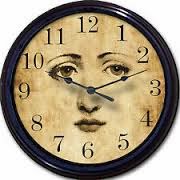
I have not added to this blog in a ridiculous amount of time, but not because of idleness. In truth, I would rather be working on my new novel, or a new story than on my little blog. And yes, I am the first to admit that the jury is still out in my mind as to the value of social media for authors. But more than that: time feels sped up. It is early morning and there are the rituals there, the yoga and the walking of the dogs & the writing & the pruning of the suckers on the olive tree, then in no time, as if in those old films where there is a full-screen shot of a timepiece whose hands are wildly moving clockwise, it is suddenly 3 p.m.! Perhaps I am not alone in this phenomenon? But when life gets juicy, with highs or with lows, I am always drawn back to poetry. I find it to be the most immediate and arrow-to-the-heart form of expression in words. Here then, a freshly minted poem:
Falling
By: Jill Koenigsdorf
And so it begins-
the cracking open & path
clearing-
Your eyelash found,
a fine sickle, dark
against the surface
of a new stick of butter.
The sawdust you made first,
then the ashes.
Spring has the reputation
as the time of awakening-
rebirth
But I say it is Autumn.
So much urgency-
a quickening before
the journey inward.
The earnest impossibility
of preparedness.
Squirrels bury the neighbor’s
walnuts
in every pot they find,
making a mess of what
was carefully smoothed &
patted down-
nudging aside old roots.
The last figs
dry
on the branch.
The last tomatoes
puckered
as the faces of old women, cling
to the vine.
The last, the last,
but also the sweetest.
And all the showiest flowers
a study in duality-
half in their vibrant, summer glory
the other half
brown & rich
with seeds.
They too long for surrender-
to close the distance between
themselves &
the fertile soil below.
They lean forward-
teetering towards that contact-
then
coming to rest there
where they await the rains
that will make them green
again.

Wednesday, July 3, 2013


Sunday, June 30, 2013
Triple Whammy: The Wild New World of Publishing
I'll be reading and signing books at 7 pm on July 12th at the Occidental Center For the Arts in Sonoma County...You won't want to miss this one! Details below.

OCA invites writers and booklovers to discuss and explore the exciting and creative new directions of publishing in this new age. Each author will talk about her journey, read from her book, and offer some tips, strategies and writing prompts. There will also be a Q&A and book sales and signings and refreshments.
The authors are:
Jill Koenigsdorf (Phoebe & the Ghost of Chagall), Becca Lawton (Junction, Utah), and Jordan E. Rosenfeld (Forged in Grace). Each author has published her book in a slightly different way: Becca as an e-book with Van Haitsma Literary; Jordan through the writer’s collective Indie-Visible Ink, and Jill through MacAdam/Cage Publishers. The moderator is Susan Bono, Editor at Tiny Lights Publication.
An interesting and informative event for both readers and writers! Free admission but donations are happily accepted.
Triple Whammy: A Panel Discussion and Book Launches Celebrating the Wild New World of Publishing
OCA invites writers and booklovers to discuss and explore the exciting and creative new directions of publishing in this new age. Each author will talk about her journey, read from her book, and offer some tips, strategies and writing prompts. There will also be a Q&A and book sales and signings and refreshments.
The authors are:
Jill Koenigsdorf (Phoebe & the Ghost of Chagall), Becca Lawton (Junction, Utah), and Jordan E. Rosenfeld (Forged in Grace). Each author has published her book in a slightly different way: Becca as an e-book with Van Haitsma Literary; Jordan through the writer’s collective Indie-Visible Ink, and Jill through MacAdam/Cage Publishers. The moderator is Susan Bono, Editor at Tiny Lights Publication.
An interesting and informative event for both readers and writers! Free admission but donations are happily accepted.
Left Bank Writers Conference, Paris, June 2013
There are so many reasons we say "no" to things. Fear, finances, time constraints, and the list goes on. In my own life, I had been saying no to too many things for too long. Yet my trying to be "practical," "disciplined," and "realistic," was not having the desired effect. Instead of feeling proud of myself and more secure, I felt itchy, anxious, hungry for the pleasure and the expansion that always comes from new experiences and challenges.

SO: being a firm believer that nothing feeds the body/mind/spirit like travel, and that all writers benefit from writers workshops, I applied to something alternately called The Left Bank Writers Conference and The Left Bank Writers Workshop. At a workshop or conference, I get so much out of being amongst my tribe, of immersing myself in words and communing with fellow authors for a full week. And this conference would also satisfy the yearning for France (I had not been back in 8 years.) Through amazing feats of budgeting contortionism, I soon found myself on a plane in San Francisco on June 14th bound for Charles De Gaulle airport in Paris. I would be staying above the best ice cream parlor in Paris, Berthillon, on the Île St. Louis, my favorite part of the city.

It was one of those magic weeks where synchronicity and happy circumstance seemed stationed around every corner. What a diverse group of eight we were! From the deep South to Australia, we had an ambassador from every school of writing: theater, poetry, fiction, and creative non-fiction. And we were all giddy to be a part of it. There is a little bit of "lost" in all artists, and as Gertrude Stein famously quipped "You are all a lost generation." We channeled Hemingway, Fitzgerald, Joyce, Eliot, Picasso, Chagall, making daily pilgrimages to their haunts, their apartments, their studios.

We started each day by writing in the Jardin de Luxembourg. We touched the plaque on the bar at Café des Lilas where Hemingway used to write. (I touched the plaque there also dedicated to Man Ray) There is something very powerful about being in a city with so much history. You walk the same streets that others walked thousands of years ago. The age and beauty of the place is quite moving. And we ate long lunches, like the French, with copious crisp bottle of Rosé and unparalleled people watching. There was even a magnificent Chagall retrospective, "Between War and Peace" that perfectly aligned his art with what was taking place in his life at the time.


We started each day by writing in the Jardin de Luxembourg. We touched the plaque on the bar at Café des Lilas where Hemingway used to write. (I touched the plaque there also dedicated to Man Ray) There is something very powerful about being in a city with so much history. You walk the same streets that others walked thousands of years ago. The age and beauty of the place is quite moving. And we ate long lunches, like the French, with copious crisp bottle of Rosé and unparalleled people watching. There was even a magnificent Chagall retrospective, "Between War and Peace" that perfectly aligned his art with what was taking place in his life at the time.
I came looking for inspiration and found it. Paris renews my spirit. My next book features Madame Curie as a character and sure enough, a block from my petite apartment, on the banks of the Seine, was the very apartment where she lived for a time. On my last night in Paris, the first night of Summer, the streets alive with people dancing and making music until dawn for the Fête de la Musique, I stood outside her building and looked up, most happy that I had said "yes."

Thursday, April 18, 2013
Poem In Your Pocket Day
Today is National Poetry In Your Pocket Day. I have chosen the 4th portion of beloved Frank O'Hara poem "Alma" which goes like this:
4
Onward to the West, “Where I came from,
where I’m going. Indian country.” Gold.
Oh say can you see Alma. The darling
of Them. All her friends were artists.
They alone have memories. They alone
love flowers. They alone give parties
and die. Poor Alma. They Alone
/She died,
and it was as if all the jewels in the world
had heaved a sigh. The seismograph
at Fordham University registered, for once,
a spiritual note. How like a sliver
in her own short fat muscular foot.
She loved the Western World, though
there are some who say she isn’t really dead.
1953
from Lunch Poems
 I began my writing life as a poet, my first poem at age ten having something to do with moths. I think the first line was "There's moths a-plenty by my bedside now...." I recall also as a young thing looking at the Redbud trees starting to bloom in the neighborhood and writing: "Who knows if these/rows of trees/are really large curd/lavender/cottage cheese?" I was so proud that it rhymed and was going for the look of the buds on the trees. That's still what I see when I look at a Redbud.
As a rounded peg in the square hole of Kansas Suburbia, I always took great solace during my stormy adolescence from those pleasing, small, transporting poetry books that City Lights put out. They were perfect, the size of a sandwich, and that too made them seem slightly subversive & outré. And man, I was hungry for outré.


On the ladder of writing genres, even though I write primarily fiction now, I have always placed poetry on the top rung. It speaks volumes that at the end of a particularly powerful poem at a reading, audience members emit a sound, something between a moan and a sigh and a whew and an oomph of surprise. I love that this low short guttural sound happens spontaneously and universally, as natural as breathing. I always feel moved to write after reading or hearing poetry. I still write poems myself, but it now it seems saved for the larger events in life: heartbreak, Spring, love, death, longing. When I need to express something and crystalize the verbiage, poetry is the means to get in touch with the essence of things. I admire the distillation and focus that requires.
I always recall what a fellow workshop attendee once said at the Napa Valley Writers Conference years ago. He was a poet and I was in the land of fiction. We got the chance to rub shoulders while waiting in line for a buffet lunch. I said:
"I always try to guess which ones here are the poets and which writers are in fiction."
"Well that's easy," he said.
"How so?"
"The fiction writers are talking about agents and the poets are talking about the food."
4
Onward to the West, “Where I came from,
where I’m going. Indian country.” Gold.
Oh say can you see Alma. The darling
of Them. All her friends were artists.
They alone have memories. They alone
love flowers. They alone give parties
and die. Poor Alma. They Alone
/She died,
and it was as if all the jewels in the world
had heaved a sigh. The seismograph
at Fordham University registered, for once,
a spiritual note. How like a sliver
in her own short fat muscular foot.
She loved the Western World, though
there are some who say she isn’t really dead.
1953
from Lunch Poems
As a rounded peg in the square hole of Kansas Suburbia, I always took great solace during my stormy adolescence from those pleasing, small, transporting poetry books that City Lights put out. They were perfect, the size of a sandwich, and that too made them seem slightly subversive & outré. And man, I was hungry for outré.
On the ladder of writing genres, even though I write primarily fiction now, I have always placed poetry on the top rung. It speaks volumes that at the end of a particularly powerful poem at a reading, audience members emit a sound, something between a moan and a sigh and a whew and an oomph of surprise. I love that this low short guttural sound happens spontaneously and universally, as natural as breathing. I always feel moved to write after reading or hearing poetry. I still write poems myself, but it now it seems saved for the larger events in life: heartbreak, Spring, love, death, longing. When I need to express something and crystalize the verbiage, poetry is the means to get in touch with the essence of things. I admire the distillation and focus that requires.
I always recall what a fellow workshop attendee once said at the Napa Valley Writers Conference years ago. He was a poet and I was in the land of fiction. We got the chance to rub shoulders while waiting in line for a buffet lunch. I said:
"I always try to guess which ones here are the poets and which writers are in fiction."
"Well that's easy," he said.
"How so?"
"The fiction writers are talking about agents and the poets are talking about the food."
Subscribe to:
Posts (Atom)